

A NeuroStar® Advanced Therapy treatment session is a short outpatient procedure that lasts about 19 minutes. During treatment, you can relax in the treatment chair. You can also speak with our TMS Specialists whenever necessary. After the procedure, you can immediately return to your normal routine, including driving.
Because your TMS-certified physician needs to determine how to most effectively administer treatment, your first session could last up to an hour and a half. You will be provided and asked to wear protective earplugs, as the system emits a tapping sound during operation.
Your TMS physician will first perform a test to identify your motor threshold. The motor threshold is the amount of magnetic field strength that results in a movement of your right thumb. This test is important because it identifies the magnetic field strength that will be used in your treatment. This field strength is customized for each patient to deliver the correct treatment dose.
After this initial procedure, the TMS physician will determine the place on the head where the TMS treatment will be applied and the magnetic coil will be moved to that location. This will allow you to receive optimal treatment.
The TMS Specialist will then administer TMS Therapy over an approximately 19-minute period. In 30-second intervals, the device will deliver rapid “pulses” of the magnetic fields. These will feel like tapping on your scalp. Some patients may find this tapping uncomfortable. Your physician may be able to make adjustments to reduce this discomfort.
Immediately following each treatment session, you may return to your normal daily routine, including driving. During or after treatment you may experience headache or discomfort at the site of stimulation. These are common side effects that often improve as further treatment sessions are administered. If necessary, you can treat this discomfort with an over-the-counter analgesic. If these side effects persist, your TMS physician can temporarily reduce the strength of the magnetic field pulses being administered in order to make treatment more comfortable.
In clinical trials, most patients who benefited from NeuroStar TMS Therapy experienced results by the fourth week of treatment. Some patients may experience results in less time, while others may take longer. You should discuss your depression symptoms with your physician throughout the treatment course. If symptoms persist, you may want to consider other antidepressant options.
At Statesboro Psychiatric Associates, our goal is to ensure that our patients have access to the best treatments available, including the number one physician-recommended TMS treatment of its kind, NeuroStar® Advanced Therapy.
NeuroStar is delivered in a personalized treatment program by our expert TMS technicians, who are certified in TMS program delivery. Your customized TMS treatment program is carefully designed to meet your unique needs and adjusted throughout your treatment course to ensure that you are achieving optimal results, giving patients in Statesboro and Savannah a clear sense of how NeuroStar Advanced TMS therapy works.
Because your TMS-certified physician needs to determine how to most effectively administer treatment, your first session could last up to an hour and a half. You will be provided and asked to wear protective earplugs, as the system emits a tapping sound during operation.
Your TMS physician will first perform a test to identify your motor threshold. The motor threshold is the amount of magnetic field strength that results in a movement of your right thumb. This test is important because it identifies the magnetic field strength that will be used in your treatment. This field strength is customized for each patient to deliver the correct treatment dose.
After this initial procedure, the TMS physician will determine the place on the head where the TMS treatment will be applied, and the magnetic coil will be moved to that location. This will allow you to receive optimal treatment.
The TMS Specialist will then administer TMS Therapy over an approximately 19-minute period. In 30-second intervals, the device will deliver rapid “pulses” of the magnetic fields. These will feel like tapping on your scalp. Some patients may find this tapping uncomfortable. Your physician may be able to make adjustments to reduce this discomfort.
In clinical trials, most patients who benefited from NeuroStar TMS Therapy experienced results by the fourth week of treatment, showing how TMS therapy in Statesboro and Savannah works to improve symptoms of depression. Some patients may experience results in less time, while others may take longer. You should discuss your depression symptoms with your physician throughout the treatment course. If symptoms persist, you may want to consider other antidepressant options.
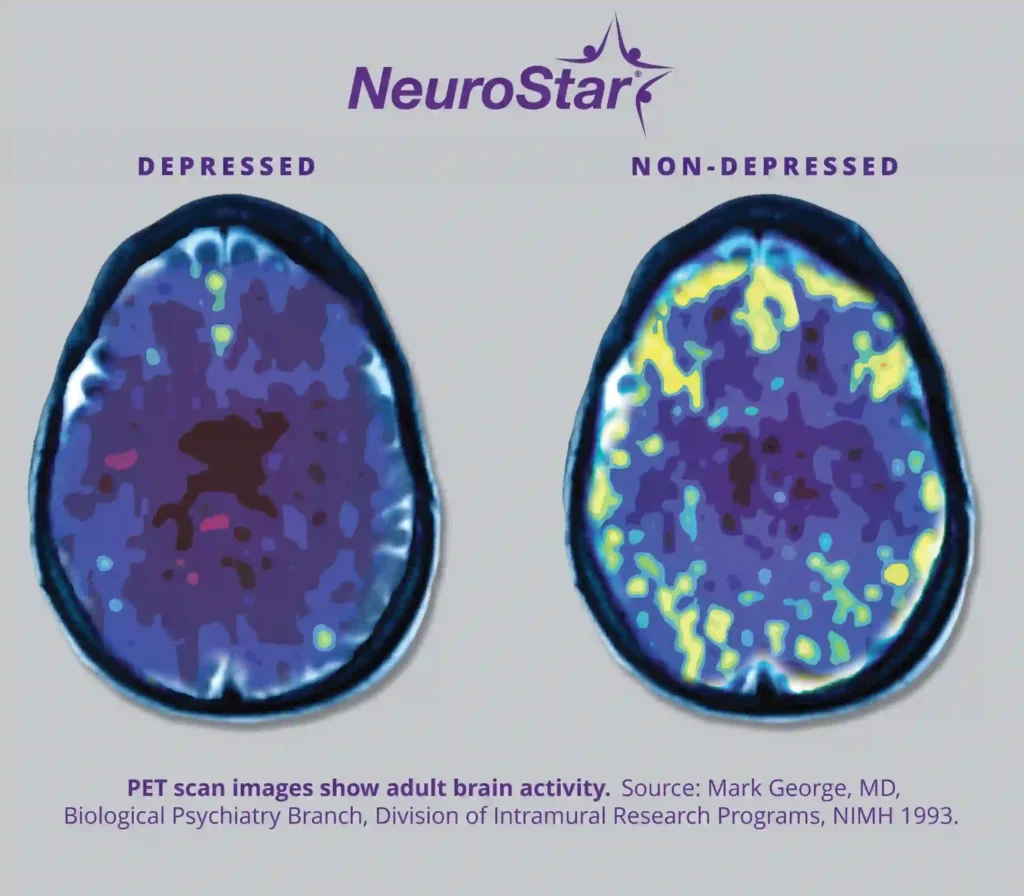
NeuroStar TMS therapy is a safe and non-invasive treatment in Statesboro and Savannah that works by using gentle magnetic pulses to stimulate specific parts of your brain that may not function as well in individuals with depression or anxiety.
During your treatment session, the NeuroStar treatment device sends these pulses to targeted areas of your brain, helping to activate them and improve their function. This can improve your mood by boosting the activity of brain chemicals like serotonin, which play a big role in how you feel..
NeuroStar is an innovative treatment that is highly endorsed by healthcare professionals for its proven effectiveness and non-invasive treatment delivery.
If you are wondering how NeuroStar Advanced TMS therapy in Statesboro and Savannah works, speak with us today. We will help you discover how treatment can be right for your mental health. Schedule your consultation today.
A NeuroStar® Advanced Therapy treatment session is a short outpatient procedure that lasts about 19 minutes. During treatment, you can relax in the treatment chair. You can also speak with our TMS Specialists whenever necessary. After the procedure, you can immediately return to your normal routine, including driving.
Because your TMS-certified physician needs to determine how to most effectively administer treatment, your first session could last up to an hour and a half. You will be provided and asked to wear protective earplugs, as the system emits a tapping sound during operation.
Your TMS physician will first perform a test to identify your motor threshold. The motor threshold is the amount of magnetic field strength that results in a movement of your right thumb. This test is important because it identifies the magnetic field strength that will be used in your treatment. This field strength is customized for each patient to deliver the correct treatment dose.
After this initial procedure, the TMS physician will determine the place on the head where the TMS treatment will be applied and the magnetic coil will be moved to that location. This will allow you to receive optimal treatment.
The TMS Specialist will then administer TMS Therapy over an approximately 19-minute period. In 30-second intervals, the device will deliver rapid “pulses” of the magnetic fields. These will feel like tapping on your scalp. Some patients may find this tapping uncomfortable. Your physician may be able to make adjustments to reduce this discomfort.
Immediately following each treatment session, you may return to your normal daily routine, including driving. During or after treatment you may experience headache or discomfort at the site of stimulation. These are common side effects that often improve as further treatment sessions are administered. If necessary, you can treat this discomfort with an over-the-counter analgesic. If these side effects persist, your TMS physician can temporarily reduce the strength of the magnetic field pulses being administered in order to make treatment more comfortable.
In clinical trials, most patients who benefited from NeuroStar TMS Therapy experienced results by the fourth week of treatment. Some patients may experience results in less time, while others may take longer. You should discuss your depression symptoms with your physician throughout the treatment course. If symptoms persist, you may want to consider other antidepressant options.